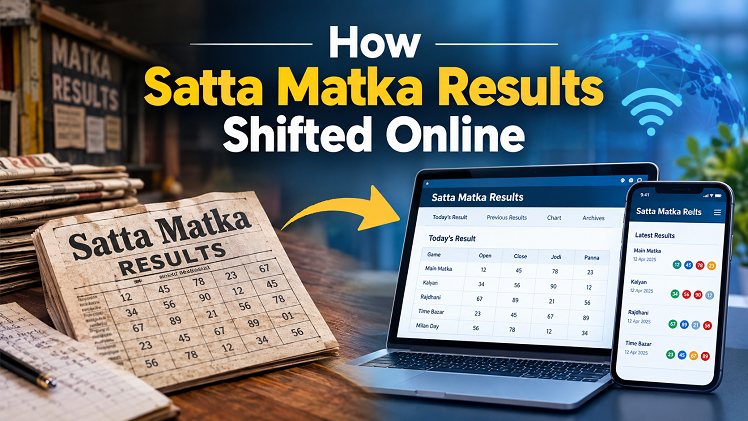
The way people access information has changed dramatically over the past two decades. Traditional newspapers, printed notices, local information networks, and word of mouth have increasingly been replaced by websites, mobile devices, and real-time digital updates. The world of Satta Matka results has followed this broader shift, moving from primarily offline sources toward online information platforms.
This transition reflects a wider change in how people search for time-sensitive information. Instead of waiting for printed publications or relying on local sources, internet users can now access result-related information through websites and mobile browsers.
From Offline Information to Digital Platforms
Historically, Satta Matka-related results were commonly communicated through physical channels. Printed papers, local announcements, and personal networks played an important role in distributing information. Access depended heavily on location and the availability of particular sources.
The growth of the internet changed this model. Websites could publish information much faster and make it accessible to people in different locations. As internet access expanded across India, more users became comfortable searching online for information that was previously available through traditional channels.
This development also introduced a new type of information ecosystem. Dedicated websites began organizing result-related information into pages, tables, archives, and other digital formats designed for easier browsing.
The Role of Search Engines
Search engines have played an important role in the online transition. Users no longer need to know a particular publication or physical source to find information. They can simply enter a relevant search query and review the available websites.
For example, searches for satta matka result online illustrate how terminology itself has adapted to the digital environment. The phrase combines a traditional subject with a modern method of accessing information.
Search-driven discovery has also encouraged website owners to structure information more clearly. Headlines, page titles, URLs, categories, and archives can help search engines understand what a page contains while making navigation easier for visitors.
Mobile Access Changed the Experience
Another major factor behind the online shift has been the widespread adoption of smartphones. Users can now browse websites from almost anywhere with an internet connection.
Mobile-friendly websites generally provide a more convenient experience than older desktop-only pages. Information can be displayed in compact tables, lists, or sections that are easier to read on smaller screens.
This has made online information consumption considerably faster. Instead of depending on a particular physical source or location, users can use a smartphone browser to search for information whenever they have internet access.
Real-Time Information and Website Updates
Digital publishing also offers an important advantage: information can be updated without producing a new physical edition. Website administrators can modify pages, add new entries, and maintain historical archives from a centralized system.
This creates a fundamentally different publishing model. Traditional printed material is static once distributed, whereas websites can continuously evolve.
However, the ability to update information quickly also makes accuracy important. Visitors should consider the reliability of the source, the date of publication, and whether information has been properly verified.
The Importance of Responsible Information Consumption
The transition to online platforms does not remove the need for responsible decision-making. Websites can make information easier to access, but accessibility should not automatically be interpreted as reliability.
Users should distinguish between informational content and promotional claims. They should also be aware that gambling-related activities may be regulated differently depending on their location.
From a digital publishing perspective, transparency is particularly important. Websites should clearly identify their information sources, provide appropriate context, and avoid presenting uncertain information as confirmed fact.
Looking Ahead
The shift from offline to online result information is part of a much larger digital transformation. News, sports scores, financial information, entertainment updates, and many other categories have moved toward websites and mobile applications.
Satta Matka-related information has experienced a similar transition. Search engines, smartphones, faster internet connections, and continuously updated websites have changed how people discover and consume information.
Ultimately, the online shift is less about a single website or platform and more about changing information habits. People increasingly expect information to be searchable, accessible, mobile-friendly, and updated digitally. As internet technology continues to develop, those expectations will likely continue shaping how specialized information is published and accessed online.